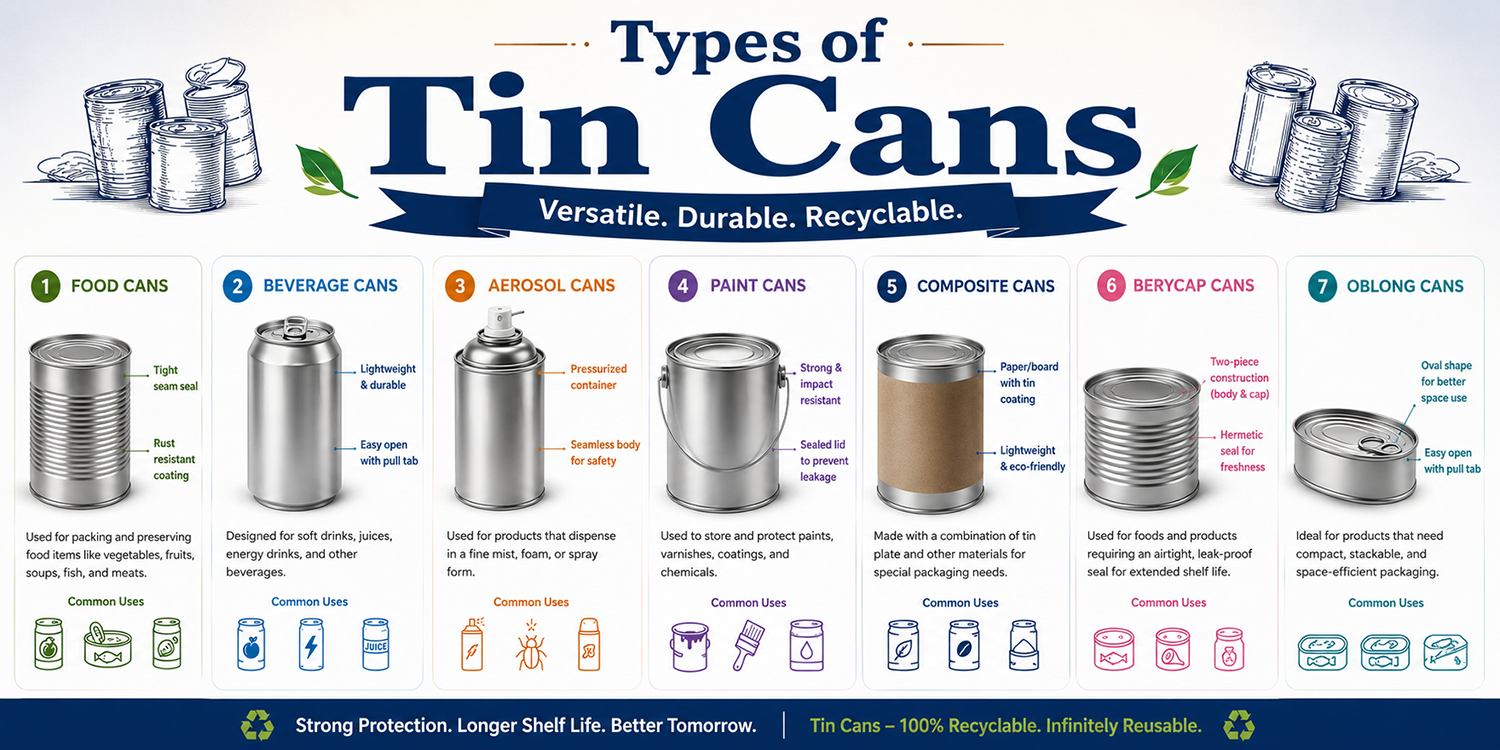

Tin cans are one of the most versatile packaging solutions used across industries due to their strength, durability, and ability to preserve product quality. From food and beverages to industrial products and specialty items, different types of tin cans are designed to meet specific packaging requirements. Understanding these varieties helps businesses choose the most suitable packaging option while ensuring product safety, shelf life, and consumer convenience.Tin cans are manufactured in multiple shapes, sizes, and designs, each serving a unique purpose. Round tin cans are commonly used for fruits, vegetables, dairy products, and ready-to-eat foods because they provide excellent sealing and efficient storage. Easy-open cans feature pull-tab lids that allow consumers to access products conveniently without additional tools. Rectangular and square tin containers are often preferred for biscuits, confectionery items, tea, coffee, and premium gift packaging due to their attractive appearance and space-saving design.Food-grade tin cans are specially coated to prevent interaction between the packaging material and food products, ensuring freshness, taste, and nutritional quality. Decorative tin boxes combine functionality with visual appeal, making them ideal for premium products and promotional packaging. Aerosol cans, on the other hand, are engineered to safely store and dispense pressurized products such as sprays, lubricants, and personal care items.In addition to their wide range of applications, tin cans are highly valued for their sustainability and recyclability. They can be recycled multiple times without losing their strength or quality, making them an environmentally responsible packaging choice. Their robust construction protects products from moisture, light, oxygen, and external contamination, helping maintain product integrity throughout storage and transportation.
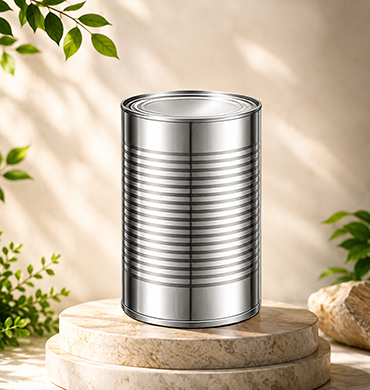
Round tin cans are among the most widely used packaging formats due to their strength, stacking efficiency, and superior sealing performance. They are commonly used for canned fruits, vegetables, condensed milk, sweet corn, seafood, soups, and ready-to-eat meals. Their cylindrical shape distributes pressure evenly, making them highly durable during transportation and storage.The airtight seal of round tin cans helps protect products from moisture, oxygen, and contaminants, ensuring longer shelf life and product freshness. Their standardized design also supports high-speed manufacturing and filling operations, making them a cost-effective solution for food producers worldwide.Additionally, round tin cans are highly recyclable and contribute to sustainable packaging initiatives across industries. Their compact design allows for efficient warehousing, shipping, and retail display, helping reduce storage and logistics costs. Available in a wide range of sizes and capacities, round tin cans can accommodate everything from small food portions to bulk packaging requirements, making them a versatile and reliable choice for manufacturers seeking both performance and environmental responsibility.